How Elskavon and Melkutus Party Make Music with Soundly
A voice in a Norwegian hall. Water on hot sauna stones. The sound of fire.
None of these sounds started as musical instruments. But musicians can hear other possibilities in them.
Soundly is not only used by sound designers. Musicians working across many genres use it to find, organize, and transform material for new music.
They can search Soundly’s cloud library and index audio on their own drives. They can audition a recording, select part of its waveform, test changes, and move the result into a DAW.
Producer Chris Bartels, who releases music as Elskavon, used recordings made by Soundly in Norway for his new single, “Mannequin.”
One recording contained a short human sound from a hall. Bartels found the recording in Soundly and selected the part he wanted. He then loaded it into Logic Sampler and mapped it across a MIDI keyboard.
The voice became an arpeggio.
Bartels used other recordings from the same session for percussion, melodies, pads, and additional layers.
“Mannequin” is the complete song used in the Elskavon × Soundly video above. The single was released on August 20. Listen to “Mannequin” on all streaming platforms.
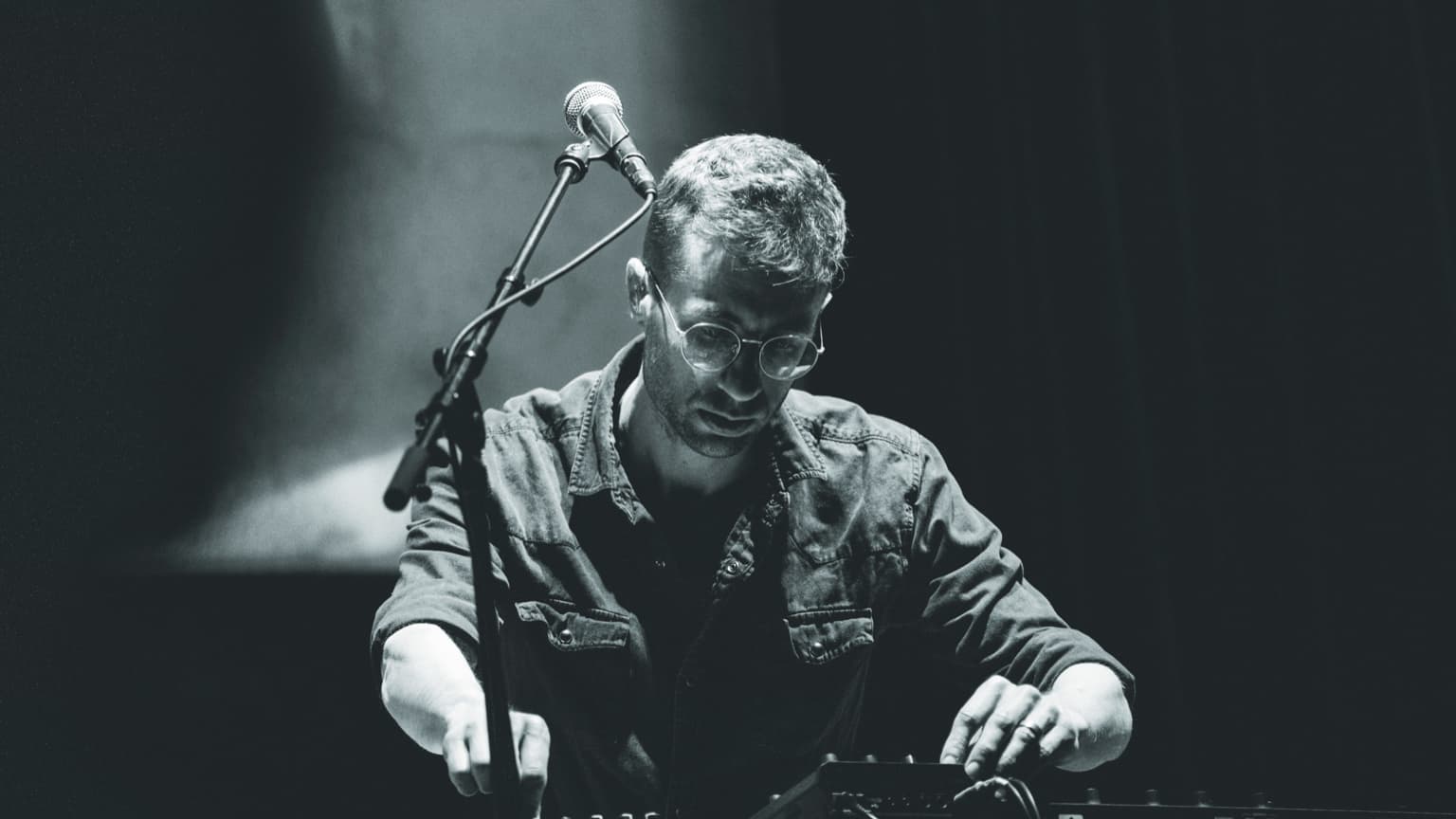
Finnish trio Melkutus Party uses Soundly in another way.
Janne Storm searches Soundly’s library for recordings from the physical world. On the group’s forthcoming album, Mahti, a recording of löyly became an accent similar to a crash cymbal. Löyly is the burst of steam produced when water hits hot sauna stones.
Fire recordings became percussion. Other recordings became part of the group’s mix of kantele, setara, percussion, vocals, and live electronics.
Melkutus Party performed at Kaustinen Folk Music Festival on July 18, 2026. The live trailer features Janne Storm, Jenni Venäläinen, and Tatu Viitala. Aapo Niininen of Must Have Melon made the video.
We spoke with Chris Bartels, who releases music as Elskavon, and separately with Janne Storm and Jenni Venäläinen from Melkutus Party.
The two projects use the same software for very different kinds of music. Chris searches his own recordings and sessions for material he can reuse. Melkutus Party brings sounds from Soundly’s library into music built around acoustic instruments and live electronics.
We asked how a recording becomes music.
Soundly as an Instrument
— Chris, when did an ordinary recording first begin to feel like musical material rather than a sound effect?
I first came to Soundly through sound design. I was creating custom music, licensing tracks, and handling sound design and mixes for commercials. I also worked on occasional short films.
At that point, I used Soundly in the usual way. I searched for effects, auditioned them, selected the parts I needed, and moved them into post-production projects.
Then I realized the same database could organize my music.
I indexed external drives containing drum samples, atmospheres, field recordings, full Logic sessions, song stems, and vocal improvisations. Soundly made all of that material searchable from one place without requiring me to reorganize every project first.
My filenames are not always consistent, but I have enough of a system for search to work. I can combine a project name with “drums stem” or search for “vocal improv.” The results can include finished songs, old exports, and unfinished ideas.
I usually keep Logic Pro on one monitor and Soundly on the other. I can search while the session remains open, audition a long stem in Soundly, and select only the useful part of its waveform. I can then test the selection at another pitch before moving it into Logic.
If a source was in F-sharp and the new song is in C, I can pitch it down by six semitones. That interval is a tritone. The change can make the same voice or synthesizer feel like different material.
Soundly made old recordings easier to find and encouraged me to search for musical ideas in material I might otherwise have forgotten.
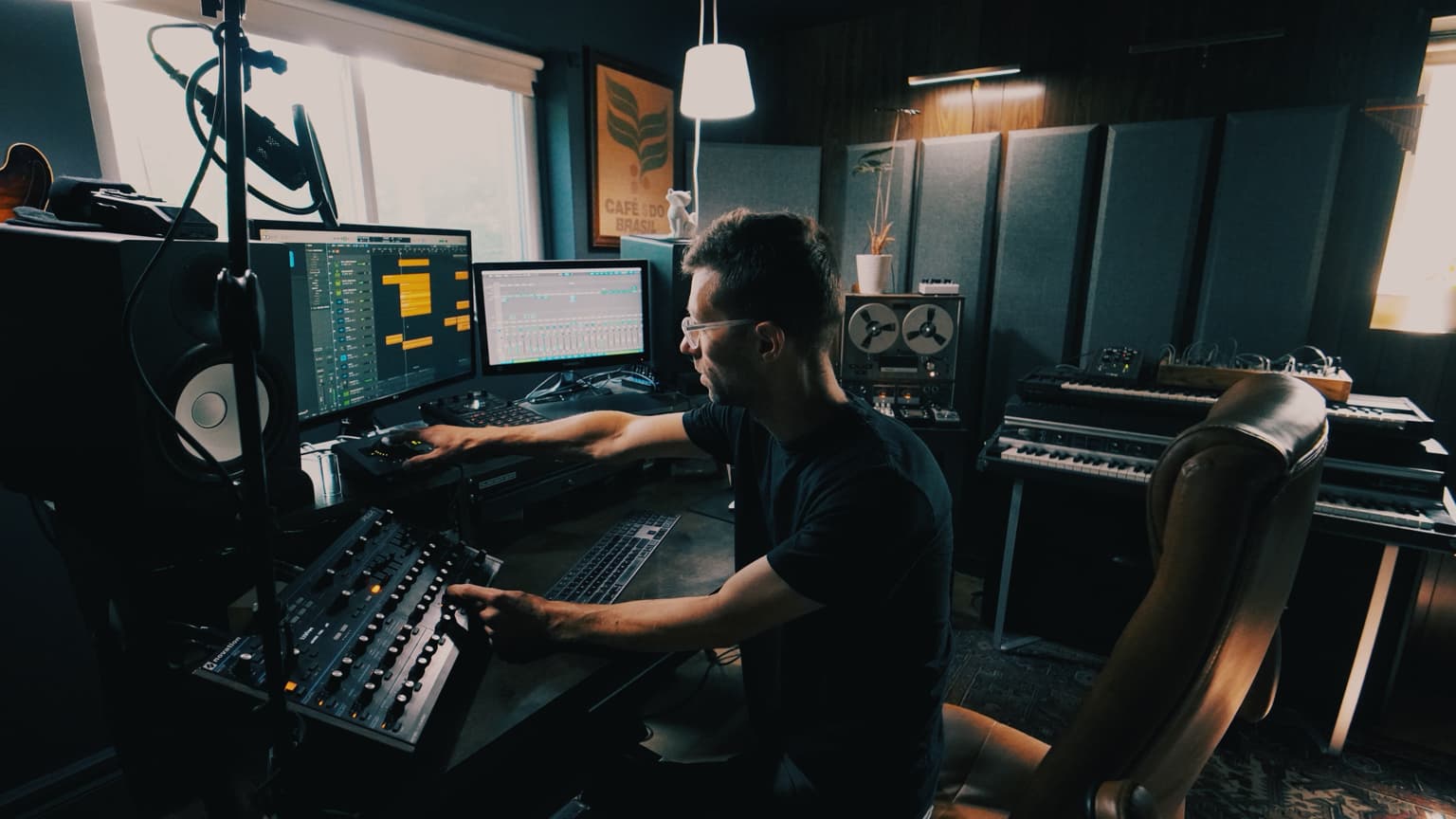
Chris began with files collected during years of studio work. Jenni Venäläinen began with an instrument she had played throughout her life.
— Jenni, the kantele is often associated with calm and meditative music. Why did you want to make it a dance instrument again?
I have played the kantele throughout my life. Nowadays people often present it as a calm, meditative instrument that represents tradition.
But kantele players also played for dancing in nineteenth-century Karelia. I started with a simple question. If people danced to this instrument before, why not today?
I received a Kone Foundation grant in 2020. The grant let me explore Karelian dance tunes with electronics and make music for people to dance to.
The project began with me working alone. I made the first album with a producer from Kuopio. By early 2023, the album was due that autumn, and I was booking summer concerts. I needed a live band.
Tatu, our drummer, contacted me after the first single and said he wanted to take part. I already knew Janne from another band.
I had never heard somebody process my kantele live while I was playing it. At our first rehearsal, my hands made familiar movements, but the sound coming back to me was completely different.
The electronics did not replace the kantele or ask me to abandon my way of playing. They showed me how much more could exist inside the same performance.
I knew that I wanted Janne in the group.
The trio began performing in summer 2023. The first album still appeared under my name, but the project had become a band. We wanted the next album to be released simply as Melkutus Party.
We called the album Mahti, a Finnish word that suggests power, strength, and creative force.
Older kantele players took small themes and varied them continuously. They did not use the modern word “improvisation.” They described the practice as playing with their own mahti, or their own power.
The title also describes this band. The music comes from what the three of us can make together.
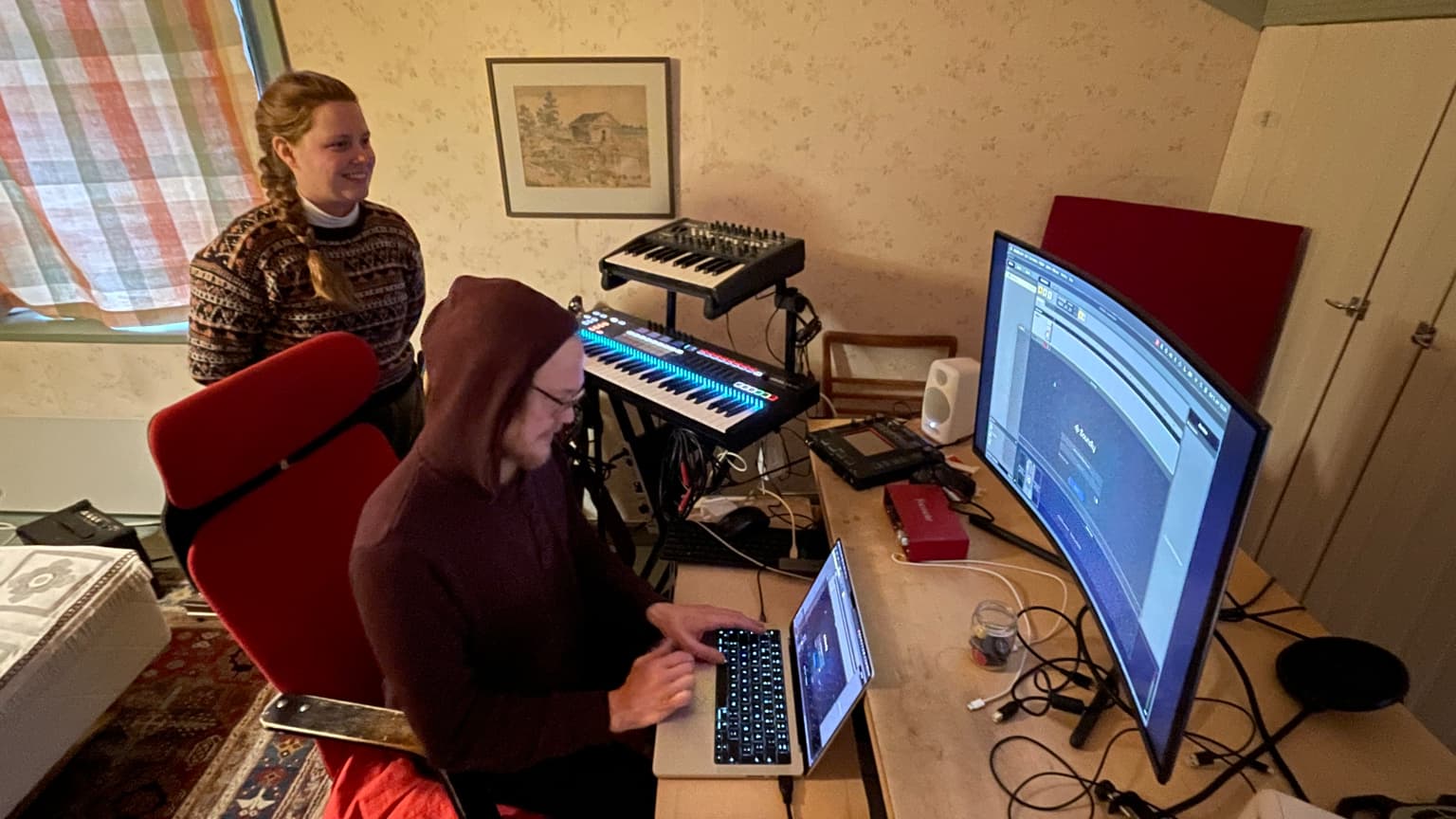
Jenni and Janne from Melkutus Party used electronics to restore an older function of the kantele. Chris chose to loosen rules he had placed around Elskavon.
— Chris, you described Origins as a farewell to ambient music. What did you mean by that?
I did not mean that I was leaving ambient music behind. I was leaving a fixed idea of what Elskavon was allowed to be.
I had placed boundaries around the project in my head. The music was mostly instrumental and beatless. I used wordless voices as atmosphere, but I did not write lyrical vocals. There were some post-rock elements, but the center was ambient and neoclassical music.
With Origins, I stopped following those rules.
I worked with tape machines, cassettes, tape loops, synthesizer experiments, and processed vocals. The title track began while I was sitting on a couch with an Ableton Push. I was looping sounds without trying to write an Elskavon song.
The first idea combined sustained piano-like samples, a kick drum, and a synthesizer part with an almost 1980s character. I first thought of it as a separate electronic piece.
Then it began to feel like Elskavon.
That changed the project. I could use beats, lyrics, vocal fragments, and more electronic production without deciding that the result belonged somewhere else.
The older sound is still there. “Heeding Light” has cinematic, neoclassical, and ambient elements. It also contains vocal chops and my singing.
The point was to let all of those parts exist in the same project.
Finding a New Job for a Sound
Chris expanded Elskavon by removing rules. Janne Storm often begins with another kind of limit. He prefers to transform a physical instrument or recording instead of starting with a software preset.
— Janne, you said you would rather process an acoustic source than begin with a software instrument. What does that change in your music?
I like synthesizers, but Mahti contains surprisingly few of them. I prefer to play an acoustic source and process it until it becomes electronic.
That process can include gating, live sampling, and looping. I can capture a small part of a performance, divide it into pieces, and rearrange those pieces while we play.
I use a similar method with sound effects.
A recording might contain several irregular percussive events. I can test different quantization settings and force those events onto the rhythmic grid. The result can be a percussion loop that I would not have written or played myself.
For Mahti, I searched Soundly for fire, löyly, animal sounds, and ambiences. Soundly let me browse and audition those recordings, then move the selected material directly into my DAW.
The distinction is important. Soundly handled finding, auditioning, and transferring the source. I performed the album’s quantization, pitch changes, and other processing inside the DAW.
We recorded Mahti in a small studio in Helsinki, but some pieces needed to feel as if they began in a forest. An ambience from Soundly established that environment before the music moved into something stranger.
Bird recordings helped create that transition. When I pitched them down by several octaves, familiar calls became dark, unfamiliar textures.
For such extreme pitch changes, the quality of the source recording matters. A 96 kHz file can preserve frequencies above the normal range of human hearing, provided the microphone captured them. Pitching the recording down moves some of that ultrasonic information into the audible range and can retain more detail than a lower-sample-rate source.
The result may sound imaginary, but it is made from acoustic information that was already present in the recording. That is what I mean by a heightened sense of reality.
Janne begins with physical sound, then changes its timing, pitch, and setting. Chris used the Norway recordings as shared source material for “Mannequin.”
— Chris, how did you make those shared recordings feel like part of Elskavon?
The first step was deciding what each recording could do.
I imported the full batch into Soundly and listened through it. Some sounds could work almost as they were. Others became source material for Logic Pro Sampler.
The short hall voice is one example. Soundly let me isolate the small vocal fragment before I moved it into Logic. Once I mapped it across the keyboard, I could play it as an instrument. It still sounded human, but it could perform a melody or an arpeggio.
I began playing music on guitar as a teenager. When people ask about my main instrument now, I sometimes say jokingly that it is the Logic Sampler. I use it across many styles, and it produces accidents that I would not find on guitar or piano.
Layering is also important.
I might begin with one drum loop, then build five or six layers around it. I can change the pitch, process individual layers, and combine sounds with different attacks and textures.
An unchanged sample could appear in another producer’s work. That is not necessarily a problem. But layering and processing give me a result that belongs more clearly to the song I am making.
I used the same approach for a 60-sound pack connected to “Mannequin.” I did not export unchanged parts of the finished song. I returned to the Norway recordings and the “Mannequin” stems, then made new material from them.
The pack includes rhythmic loops, ambient textures, one-shots, and drum sounds. Some recordings went through pedals and Eurorack equipment. A recording of a stick hitting a tree became another source for processing.
I was recycling material that had already been recycled once.
The pack is available in Soundly. Enter #elskavon in the search field to find all 60 sounds.
We thank Chris for allowing Soundly users to use sounds from the project in their own work.
— Chris, does an Elskavon song usually begin with a sound, an instrument, or a feeling?
There is no single starting point.
A feeling often comes first. I might have an idea of the space or emotional direction I want, without knowing which instrument will lead me there.
Sometimes I begin with a simple texture, then sit at the piano and find the notes that belong with it. A more rhythmic piece might start with a synthesizer arpeggio, a guitar line, or a drum beat. Another piece might begin with a tape loop.
Soundly creates another way in.
I can search without looking for a finished musical part. I listen for a sound that suggests movement, pitch, or atmosphere, then place it on the Logic timeline and begin working around it.
Logic is my main workspace. It is where I arrange and finish most of the music. Soundly remains open beside it, so I can move between the composition and the archive without interrupting the session.
I use Ableton differently. It often feels more like an instrument than a second production environment. I can work with clips, loops, and samples there, then export the useful stems and return to Logic.
The starting point also changes with the project.
Across my other projects, Dellwood often begins with an acoustic guitar. KOATS is more likely to begin with an electric guitar. Elskavon gives me room to move among piano, synthesizers, samplers, guitars, tape loops, and found sound.
That freedom is useful. If every song began with the same instrument, I would be more likely to repeat the same decisions.
Chris searches for whatever can open the next path into a composition. Janne often enters Soundly with another question. What can a real-world recording become inside the music?
— Janne, how do you search Soundly when you are looking for musical material rather than a conventional sound effect?
I often begin with the physical source.
I can search for fire, birds, water, animals, or an ambience. Then I browse the results and listen for a recording that can do something inside the composition.
For music, the name of the source is only part of the information I need.
I might be interested in whether a recording has a clear pitch, strong low-end energy, or several short percussive events. Those qualities can matter more than the object named in the metadata.
The löyly recording is a good example. It can be classified as a sauna sound, but its musical function is closer to a crash cymbal. A fire recording can be classified as an ambience, while the useful part might be a series of small transients that can become percussion.
This creates an interesting difference between sound-effects search and music search.
A sound designer may need the correct object, action, and setting. A musician may be searching for an attack, a frequency range, a pitch, or a rhythmic possibility. The same recording can satisfy both searches for different reasons.
I would like more ways to browse by those musical properties. A filter for recordings with a clear pitch would be useful. So would a way to look specifically for bass-heavy or low-frequency sounds.
Another approach is Find Similar. The feature analyzes sonic qualities and searches for related recordings in Soundly and indexed local libraries.
I sometimes layer an animal recording beneath a synthesizer sound. A real growl can make a constructed growl feel more alive. Find Similar could reverse that process. I could begin with the finished synthesizer sample and search for animal recordings with related sonic qualities.
The search would not tell me what to compose. It could place two sounds beside each other that I would not have thought to compare.
Built to Change Onstage
Elskavon’s studio arrangements can contain layers that were never intended to be performed simultaneously. Melkutus Party works under a different constraint: every essential acoustic and electronic part must be performed live by the trio, without backing tracks.
— Janne, the album contains processed recordings and electronic parts, but the trio performs without backing tracks. How do you keep this material playable?
We tried to make every part of the album possible to perform live.
We do not use backing tracks. If one important part is fixed, the rest of the band must follow it. Add enough fixed parts, and the performance can become playback with musicians placed around it.
We want to communicate with each other instead.
The length of a section can change onstage. We can repeat an idea, leave it early, or let it develop. We do not need to follow a click track or watch video monitors to remain synchronized with a fixed arrangement.
My live system uses gating, sampling, looping, and effects that I can change while I play. I also perform with a setara, a bowed and plucked instrument that combines parts of a cello and guitar.
One of my controllers was originally made for a golf game in the 1990s. It was designed to measure a player’s swing.
Each hand can control three parameters. That gives me six simultaneous movements. Ableton and Max read the controller’s joystick signals and map them to effect parameters.
The movement is large enough for an audience to see. Turning small knobs and pressing buttons can hide what the electronic musician is doing. With this controller, the processing becomes a physical gesture.
I did not invent the idea. I saw another folk musician use the controller at the Sibelius Academy, then adapted the method for my own system.
The electronics remain part of the performance. They respond to the players instead of asking the players to follow a recording.
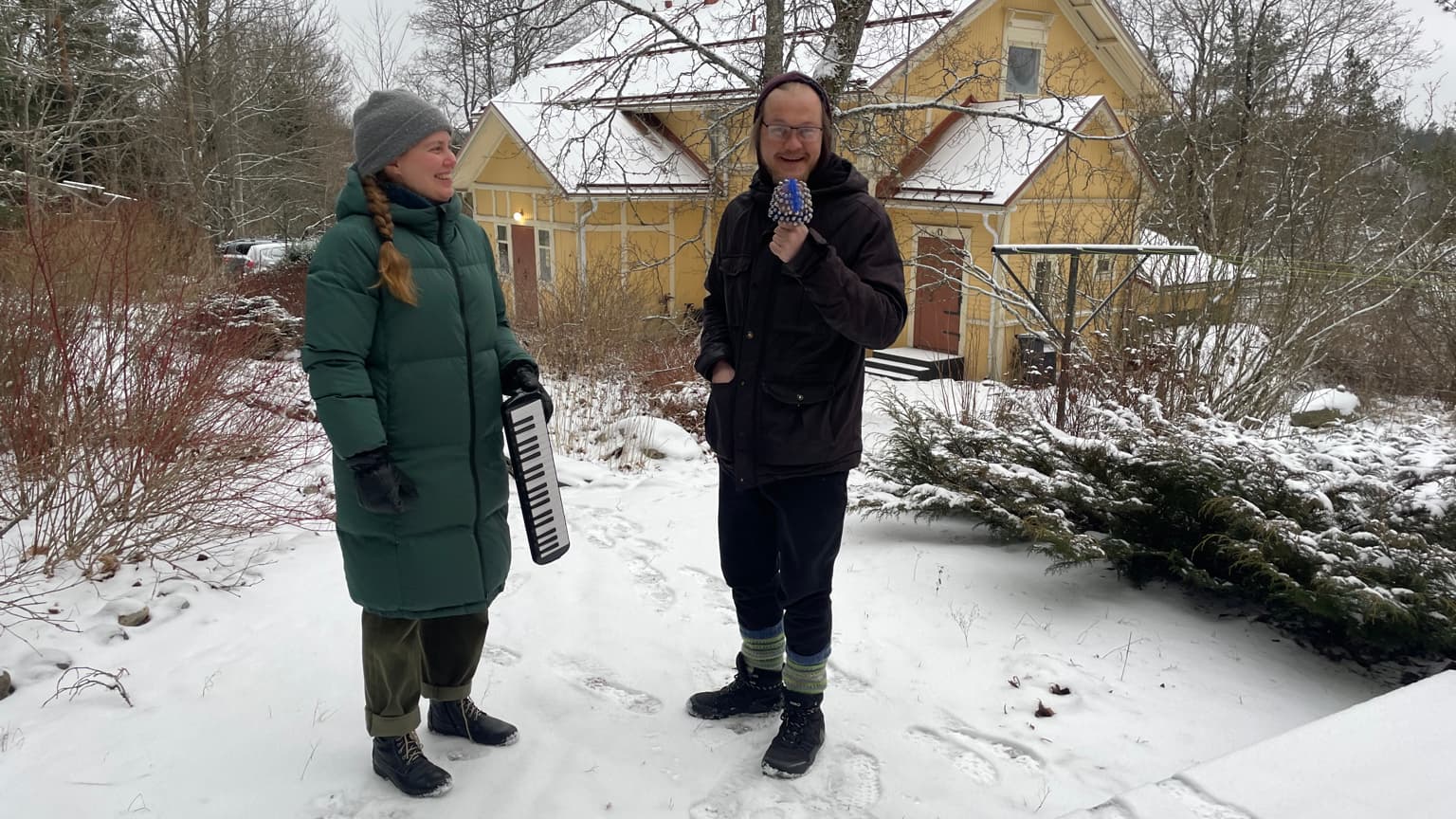
Janne’s system keeps the arrangements open onstage. That flexibility begins while the trio is writing the music.
— Janne, how did the three of you turn these live experiments into the compositions on Mahti?
We spent two separate pre-production weeks together. They worked like rehearsal camps where we could concentrate on writing the album.
Jenni brought many of the first kantele riffs. We began by jamming with those ideas and listening for what each piece could become.
Then we made a story for each composition.
We wrote down what happened during the piece. One note might identify the forest. Another might mark the point where the party starts. These notes became a map for the arrangement.
The story helped us decide when a sound should enter and what kind of change the music needed. It gave the electronic processing a function inside the composition.
After that, we developed parts individually and brought them back to the group. Jenni also made Logic demos with beat ideas. We tested everything together and changed the arrangements through rehearsal.
Most of the album was composed collectively. “Mantsi” began as Jenni’s composition and was arranged by the trio. “Kiza” was inspired by the traditional “Kizavirsi” by Jaakko Kulju.
My roles included composing, arranging, recording, mixing, and post-production effects. Jenni, Tatu, and I produced the album together.
We recorded Mahti at Studio Huopatossu in Helsinki in July 2025. Even in the studio, we kept asking whether the three of us could perform each arrangement live.
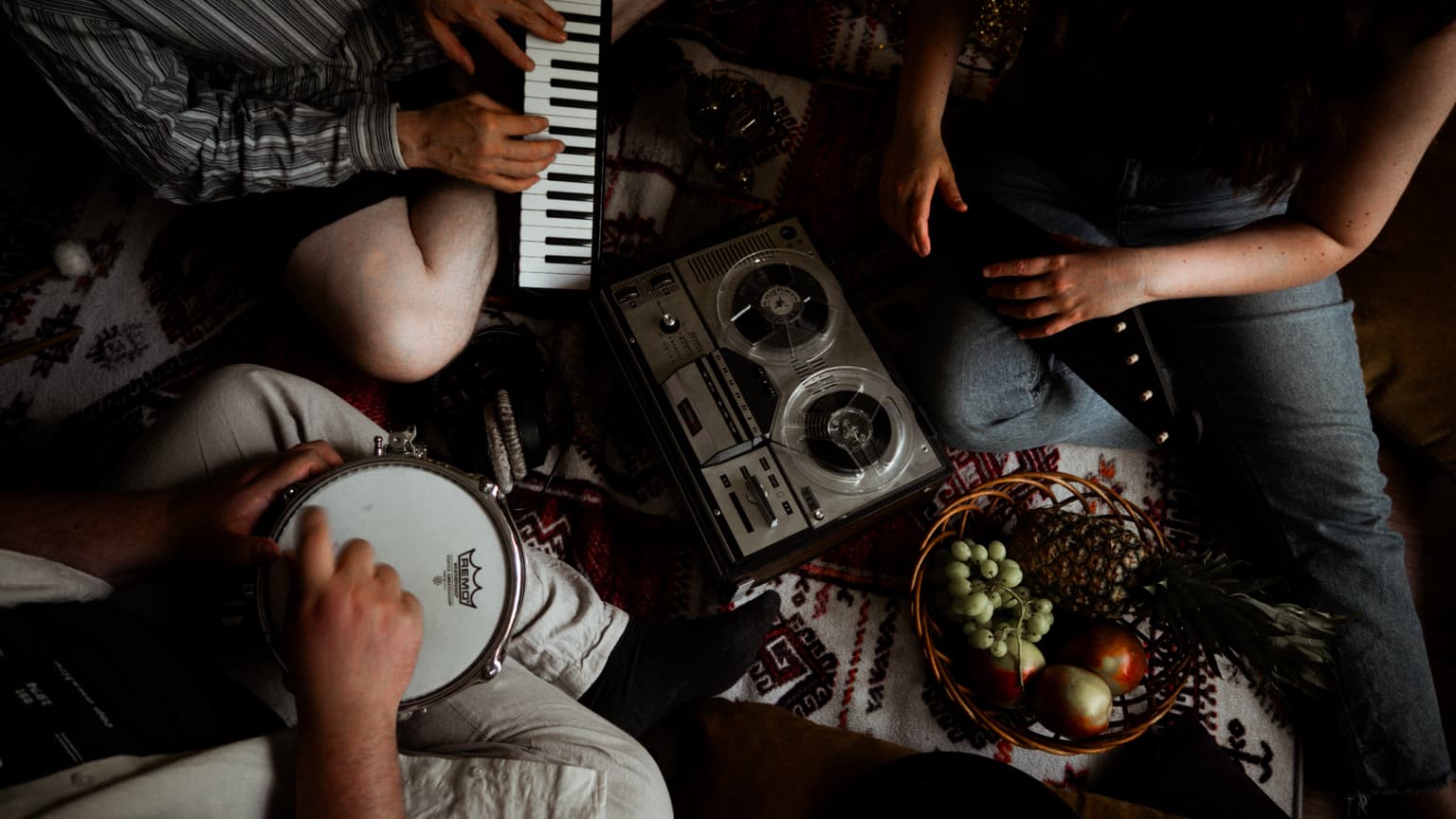
What connects Elskavon and Melkutus Party is not a shared sound. Their music and methods are markedly different. What they share is a way of treating recorded audio as active material rather than finished documentation.
For Chris, Soundly turns years of sessions, stems, and improvisations into a searchable musical memory. An idea does not disappear when a project ends. It can return in another key, at another speed, or with an entirely different purpose.
For Melkutus Party, the library extends the studio beyond its walls. Recordings of places, animals, and physical events can enter an arrangement alongside kantele, setara, percussion, voice, and electronics. The additional challenge is to make that material responsive enough to remain part of a live performance.
Soundly shortens the distance between hearing a possibility and testing it. It can retrieve, audition, and transfer the source, but it cannot decide what the sound should become. That still depends on the musician: what to isolate, what to discard, what to transform, and when a sound has found its place.
In that sense, an archive is not simply where recordings are stored. It is an instrument whose character changes according to the person searching it.
Listen to the New Music
Elskavon’s “Mannequin,” the complete song heard in the video at the beginning of this article, was released on August 20. Listen to “Mannequin” on all streaming platforms.
Melkutus Party releases its first Mahti single, “Oi emoseni”, on August 21. Listen to or save the single on your preferred streaming platform.
The second single, “Sininen salo”, follows on September 4. The album Mahti arrives through Nordic Notes on September 18.
Melkutus Party will celebrate the album with four concerts:
- September 19 — Päätösklubi at ANTI Festival, Kuopio, with Elsi Sloan
- September 25 — Korjaamon Vintti, Helsinki, with Laura Kielo and Vilma Talvitie
- September 26 — Älä vaivaudu -klubi at Bar Ö, Turku
- October 2 — Mallassauna, Oulu
Thank you to Chris Bartels, Janne Storm, and Jenni Venäläinen for taking the time to explain how they work.
We wish Elskavon the best with “Mannequin.” We also wish Janne, Jenni, and Tatu the best of luck with Mahti and the album-release concerts.
Download Soundly at getsoundly.com